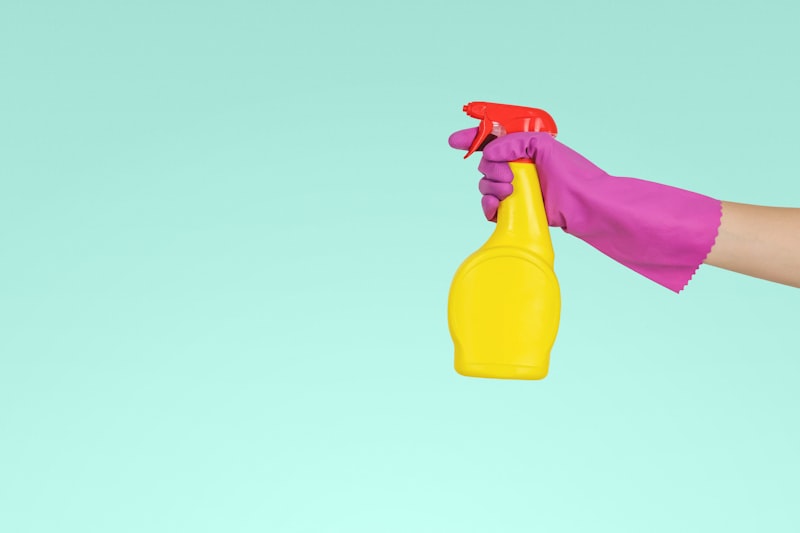
I've tested a lot of cleaning tips over the years. Some are genuinely clever. Many are nonsense. These ten have earned their place in my regular rotation because they actually save time, actually work, and don't require purchasing seventeen specialised products.
Let's be honest about this for a moment. It sounds simple on paper, and yet most people skip right past it without a second thought. The reason isn't laziness — it's usually habit, or the false sense that you already know what you're doing. But small adjustments here can change the entire experience.
1. Clean top to bottom, always
Dust and debris fall downward. If you vacuum first and then dust the shelves, you've just dirtied the floor again. Ceiling to floor, every time.
There's a version of this that most people do out of convenience, and a version that actually works. The gap between them is usually smaller than you'd expect — a few deliberate choices, a bit of advance thought, and suddenly the whole thing feels less like a compromise and more like something you genuinely chose.
"Dust and debris fall downward. If you vacuum first and then dust the shelves, you've just dirtied the floor again. Ceili..."
2. White vinegar is your all-purpose miracle
Diluted 50/50 with water, white vinegar cleans glass, surfaces, taps, and limescale with minimal effort and no harsh chemicals. Keep a spray bottle of it under every sink.
A friend who's been doing this for years told me something that stuck: the details you ignore at the start always come back around. Not as disasters, usually, but as persistent low-grade frustrations that you keep blaming on other things. Getting the foundation right eliminates a whole category of annoyance.
3. Baking soda for the oven
Make a paste of baking soda and water, spread it inside the oven, leave it overnight, and wipe clean in the morning. No chemical oven cleaner smell, no scrubbing. It genuinely works.
Think of it as building good defaults. Not rules, exactly — more like the path of least resistance that also happens to lead somewhere good. Once those defaults are in place, you don't have to think about them anymore. They just run.
"Make a paste of baking soda and water, spread it inside the oven, leave it overnight, and wipe clean in the morning. No ..."
4. Use a squeegee on carpet for pet hair
A rubber squeegee dragged across carpet pulls up pet hair that a vacuum leaves behind. Strange to watch, deeply satisfying to see work.
There's a version of this that most people do out of convenience, and a version that actually works. The gap between them is usually smaller than you'd expect — a few deliberate choices, a bit of advance thought, and suddenly the whole thing feels less like a compromise and more like something you genuinely chose.
5. The "reset" clean vs the deep clean
Distinguish between a daily 10-minute reset (surfaces cleared, dishes away, cushions straight) and a weekly deep clean. Doing the reset daily means the deep clean takes half as long.
A friend who's been doing this for years told me something that stuck: the details you ignore at the start always come back around. Not as disasters, usually, but as persistent low-grade frustrations that you keep blaming on other things. Getting the foundation right eliminates a whole category of annoyance.
"Distinguish between a daily 10-minute reset (surfaces cleared, dishes away, cushions straight) and a weekly deep clean. ..."
6. Microfibre cloths over paper towels
Microfibre cloths clean more effectively, leave fewer streaks, and cost far less over time. Keep a stack and wash them weekly.
Think of it as building good defaults. Not rules, exactly — more like the path of least resistance that also happens to lead somewhere good. Once those defaults are in place, you don't have to think about them anymore. They just run.
7. Descale your kettle with lemon
Fill with water, add a few slices of lemon, boil, let sit, rinse. Limescale dissolves without any specialist product and your kettle smells fresh.
There's a version of this that most people do out of convenience, and a version that actually works. The gap between them is usually smaller than you'd expect — a few deliberate choices, a bit of advance thought, and suddenly the whole thing feels less like a compromise and more like something you genuinely chose.
"Fill with water, add a few slices of lemon, boil, let sit, rinse. Limescale dissolves without any specialist product and..."
8. The two-minute rule for maintenance
If something will take under two minutes to clean or tidy, do it now. The bathroom mirror, the stovetop splatter, the cup ring on the table. Addressing things immediately prevents accumulation.
A friend who's been doing this for years told me something that stuck: the details you ignore at the start always come back around. Not as disasters, usually, but as persistent low-grade frustrations that you keep blaming on other things. Getting the foundation right eliminates a whole category of annoyance.
9. Newspaper for streak-free glass
Old-fashioned but real. Balled-up newspaper buffed over glass after cleaning prevents the streaks that even good cloths can leave behind.
Think of it as building good defaults. Not rules, exactly — more like the path of least resistance that also happens to lead somewhere good. Once those defaults are in place, you don't have to think about them anymore. They just run.
"Old-fashioned but real. Balled-up newspaper buffed over glass after cleaning prevents the streaks that even good cloths ..."
10. Clean your cleaning tools
A dirty mop, a clogged vacuum filter, or a mouldy spray bottle undoes your cleaning efforts. Monthly maintenance of your tools makes your cleaning exponentially more effective.
There's a version of this that most people do out of convenience, and a version that actually works. The gap between them is usually smaller than you'd expect — a few deliberate choices, a bit of advance thought, and suddenly the whole thing feels less like a compromise and more like something you genuinely chose.
None of this requires a complete overhaul. The beauty of small, consistent improvements is that they compound over time in ways that sudden big changes never quite manage. Start with one thing. Get comfortable with it. Then add another.
The people who do this well aren't necessarily the most disciplined or the most informed. They're the ones who've stopped treating it as something to get through and started treating it as something to actually enjoy. That shift in framing is worth more than any single tip I could give you.
Products We Love For This
→ Rev-A-Shelf Pull-Out Cabinet Organizer — Shop on Amazon
→ Oliver Gal Abstract Canvas Wall Art Set — Shop on Amazon
This post contains Amazon affiliate links. If you purchase through our links we may earn a small commission at no extra cost to you. We only recommend products we genuinely rate.