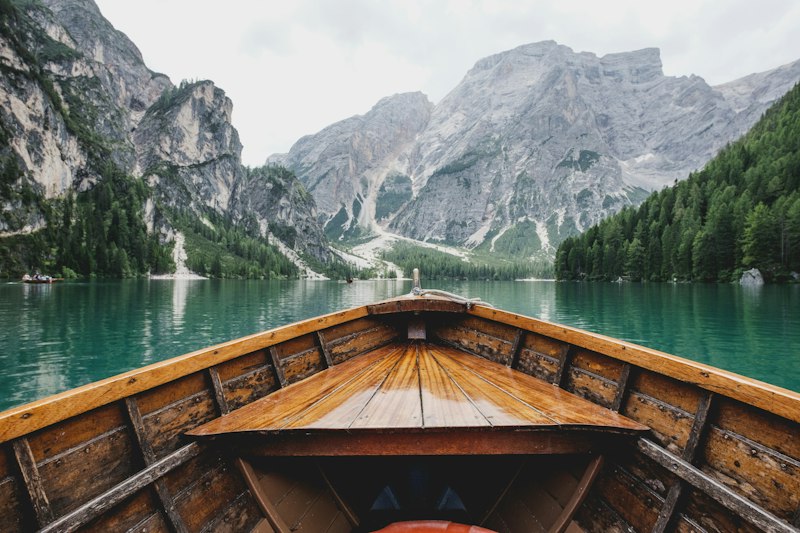
"On the fourth day, I stopped sightseeing and started just living there. That was the day the trip actually began."
There is a version of travel that looks excellent on a spreadsheet. Eight cities in twelve days. Five countries in two weeks. A photo at every landmark, a passport stamp at every border, a highlights reel that plays beautifully on Instagram and says very little about who you were when you were there.
I have done this kind of travel. I remember very little of it — not because it wasn't beautiful, but because moving so quickly through places is a little like reading a novel while flipping past every other page. The words are technically all there. You get a sense of the plot. But you don't know the characters.
Slow travel is the counter-argument. It's the practice of staying somewhere long enough for it to stop being a destination and start being a place where you live, temporarily, with a regular coffee order and a preferred walking route and an opinion about the neighborhood's best dinner spot. It's the kind of travel that leaves a mark on you — not just on your camera roll.
In 2026, it has become one of the most quietly radical choices a traveler can make.
What Slow Travel Actually Means
Slow travel isn't defined by a minimum number of days. It's a relationship with time, place, and attention. A slow traveler in a city for five days experiences something fundamentally different from a fast traveler in the same city for five days — not because of the duration, but because of the orientation.
The slow traveler goes back to the same café twice. She notices the change in light between morning and afternoon in a particular square. She develops a neighborhood mental map that feels like familiarity rather than navigation. She makes the kind of mistakes — ordering the wrong thing, taking the wrong metro line — that become stories rather than stresses.
Slow travel is, at its core, the practice of being a temporary local rather than a permanent tourist.
The economic case, too
Slow travel is also — counterintuitively — often cheaper than fast travel. Weekly and monthly accommodation rates are dramatically lower than nightly rates. Cooking occasional meals in an apartment saves significantly. You learn which restaurants have the best value and stop paying tourist prices at the obvious spots. Transportation costs drop when you're not constantly moving between cities.
The financial argument for slow travel is not its most compelling quality, but it's worth noting that traveling this way doesn't require a bigger budget. It often requires a smaller one.
The Six Principles of Slow Travel
Choose fewer places
Resist the itinerary that tries to see everything. One country, explored thoroughly, is worth more than five countries collected like stamps. Pick the places that genuinely call to you and give them time.
Stay in neighborhoods, not just hotels
The tourist district of any city is its least revealing part. Find accommodation in residential neighborhoods — where the laundry hangs between buildings, where children play in the evenings, where you learn something true about how people actually live.
Build a routine
A morning coffee spot, an evening walk, a market you return to — routines are how places become familiar rather than foreign. The routine is what turns "visiting somewhere" into "living somewhere, briefly."
Leave unscheduled time
Not every day needs a plan. The unscheduled afternoon is where slow travel lives. A bookshop discovered by wandering, a conversation with a neighbor, a park you return to — these moments don't fit in itineraries and can't be Googled in advance.
Engage with the culture beyond the obvious
The museum is worth visiting. So is the market, the neighborhood festival, the bookshop, the local radio station playlist you discover, the way people dress on a Tuesday, the things the locals are currently worried about or celebrating.
Write it down
Slow travel produces the kind of observations that fast travel doesn't have time for — small, precise, true. Write them down while they're fresh. A journal you keep on a slow trip becomes one of the most valuable souvenirs you'll ever own.
The Travel Journal Worth Keeping
Slow travel is the style of travel most worth documenting. The observations you make when you've been somewhere long enough to see past the surface — the little truths about a place, the unexpected moments — deserve a proper home. A travel journal you actually love to write in becomes part of the ritual, not a chore. Five years from now, it will be priceless.
Shop Travel Journals →Packing for a Long Stay
Slow travel and heavy packing are fundamentally incompatible. When you're staying somewhere for two or three weeks, the temptation is to pack more. The reality is that you need less — because you'll find things there, because you can do laundry, because having fewer items creates a kind of mental lightness that matches the pace of the trip.
The carry-on revolution was made for slow travelers. A well-chosen bag that fits overhead creates freedom: you can take any train, any bus, arrive anywhere without waiting, leave whenever you decide. The structural constraint of a single carry-on forces you to make better packing decisions, which almost always results in a better trip.
A Carry-On Built for the Long Stay
The slow traveler needs a carry-on that can live out of without feeling cramped — one with thoughtful organization that makes unpacking into a temporary home feel natural. A structured, beautiful carry-on is also the kind of luggage that makes you look like you know what you're doing, which has its own quiet value.
Shop Carry-On Luggage →The Wellness Dimension of Slow Travel
One of the things no one warns you about: slow travel is genuinely good for your body and mind in a way that fast travel almost never is. When you're not sprinting between airports and landmarks, you sleep properly. You eat better — because you have time to find the good places rather than defaulting to whatever's nearest. You walk more, stress less, and breathe more slowly.
Travelers who return from slow trips often describe a particular quality of rest that's distinct from ordinary vacation — less like recharging and more like genuinely resetting. The nervous system gets to actually relax, not just temporarily pause. This is worth planning around.
Travel Wellness Essentials
Long-stay travel — particularly across time zones — asks something of your body. A thoughtful wellness kit: sleep support for time zone adjustment, good skincare that travels well, the small rituals that signal to your nervous system that it can relax. These aren't luxuries on a slow trip; they're how you make the reset real.
Shop Wellness Essentials →The Best Destinations for Slow Travel in 2026
Oaxaca, Mexico has become one of the world's great slow travel destinations. The food culture alone warrants weeks. The art scene, the surrounding countryside, the markets, the mezcal producers — every layer rewards the traveler who stays long enough to find it.
Sicily, Italy is built for slow travel. The tempo of life there already resists rushing. The food, wine, architecture, and coastal light are the kind that reveal themselves gradually — a week feels like barely the beginning.
Chiang Mai, Thailand has been a slow travel hub for years and continues to earn that reputation. Affordable, culturally rich, with a thriving community of long-stay travelers and a food scene that is criminally underrated outside Asia.
The Alentejo, Portugal — slower even than Lisbon, with cork oak forests, ancient towns, and a pace of life that is almost aggressively peaceful. The kind of place that recalibrates your sense of what a day can contain.
Frequently Asked Questions
How long do I need to stay somewhere for it to count as slow travel?
There's no official minimum, but a week is roughly where it starts to shift. Five to seven days in one place begins to create the familiarity and rhythm that defines slow travel. A month is where it becomes genuinely transformative.
Is slow travel compatible with a limited vacation budget?
Often more so than fast travel. Staying in one place means lower per-night accommodation costs (weekly rates are significantly cheaper than nightly), reduced transportation spending, and the ability to cook some meals rather than eating out for every one. Slow travel rewards those who stay.
What's the biggest mistake slow travelers make?
Still scheduling every day. Slow travel requires genuine unscheduled time — afternoons with no plan, mornings that develop on their own terms. Scheduling too heavily defeats the entire purpose.
Can I do slow travel if I work remotely?
Absolutely — slow travel and remote work are natural partners. The slow traveler's schedule allows for productive work mornings followed by genuine exploration in the afternoons. The key is finding accommodation with good WiFi and establishing a work routine early in the stay.
Suggested Pinterest Titles
- What Is Slow Travel and Why Is Everyone Talking About It in 2026
- The 6 Principles of Slow Travel (That Change How You Experience the World)
- Best Slow Travel Destinations for 2026 — Where to Stay Longer
- How to Pack for a Month of Slow Travel (Carry-On Only)
- Slow Travel vs Fast Travel — Which One Is Actually Worth It
- Why Slow Travel Is Better for Your Mental Health