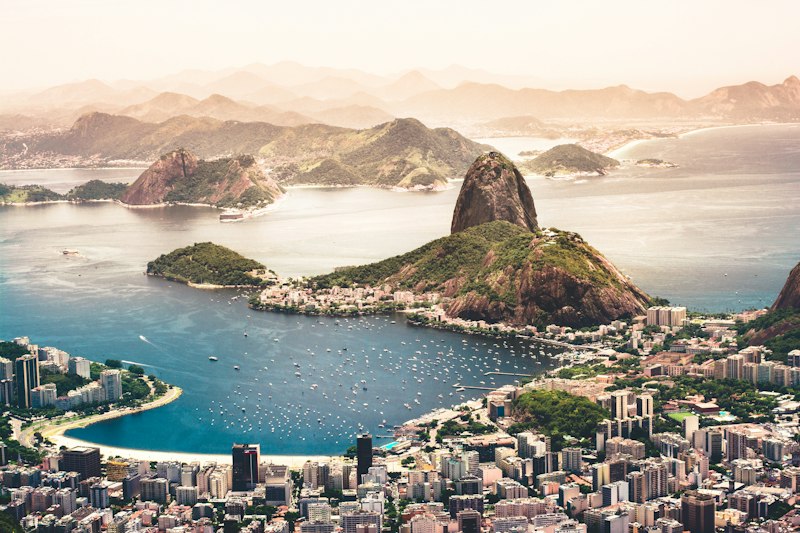
Rio is one of those cities that gives generously on the surface and rewards endlessly if you dig deeper. Its geography — mountains meeting sea, favelas sitting above yacht clubs, jungle pressing right up against the city — creates a visual drama that simply doesn't exist anywhere else on earth.
Let's be honest about this for a moment. It sounds simple on paper, and yet most people skip right past it without a second thought. The reason isn't laziness — it's usually habit, or the false sense that you already know what you're doing. But small adjustments here can change the entire experience.
Parque Lage and the Tijuca Forest
Before the tourists arrive, Parque Lage is extraordinarily peaceful. You can walk up into the Tijuca Forest — the world's largest urban rainforest — and find viewpoints where the entire city opens up below you, and all you can hear are birds and the wind in the trees. It feels impossible that this exists inside a city of seven million people.
There's a version of this that most people do out of convenience, and a version that actually works. The gap between them is usually smaller than you'd expect — a few deliberate choices, a bit of advance thought, and suddenly the whole thing feels less like a compromise and more like something you genuinely chose.
"Before the tourists arrive, Parque Lage is extraordinarily peaceful. You can walk up into the Tijuca Forest — the world'..."
The Mirante do Leblon at dusk
This clifftop viewpoint at the end of Leblon beach might be Rio's best-kept secret. When the sun is going down and the light turns everything amber and rose, and the Two Brothers mountains are silhouetted behind you — it's the kind of moment that makes you feel briefly grateful to be alive.
A friend who's been doing this for years told me something that stuck: the details you ignore at the start always come back around. Not as disasters, usually, but as persistent low-grade frustrations that you keep blaming on other things. Getting the foundation right eliminates a whole category of annoyance.
The cable car to Morro da Urca — not the summit
Most people ride the Sugarloaf cable car all the way to the top. But the view from Morro da Urca, the first stop, is actually more interesting — you get Guanabara Bay to one side and the entire Sugarloaf ridge to the other. And the crowds? Half as many.
Rio rewards the curious. Its best moments aren't on any top-ten list. They're tucked between the mountains, waiting for people willing to look.
Think of it as building good defaults. Not rules, exactly — more like the path of least resistance that also happens to lead somewhere good. Once those defaults are in place, you don't have to think about them anymore. They just run.
"Most people ride the Sugarloaf cable car all the way to the top. But the view from Morro da Urca, the first stop, is act..."
None of this requires a complete overhaul. The beauty of small, consistent improvements is that they compound over time in ways that sudden big changes never quite manage. Start with one thing. Get comfortable with it. Then add another.
The people who do this well aren't necessarily the most disciplined or the most informed. They're the ones who've stopped treating it as something to get through and started treating it as something to actually enjoy. That shift in framing is worth more than any single tip I could give you.
Products We Love For This
→ UGREEN Waterproof Phone Pouch Case — Shop on Amazon
→ BCOZZY Chin Supporting Travel Pillow — Shop on Amazon
This post contains Amazon affiliate links. If you purchase through our links we may earn a small commission at no extra cost to you. We only recommend products we genuinely rate.